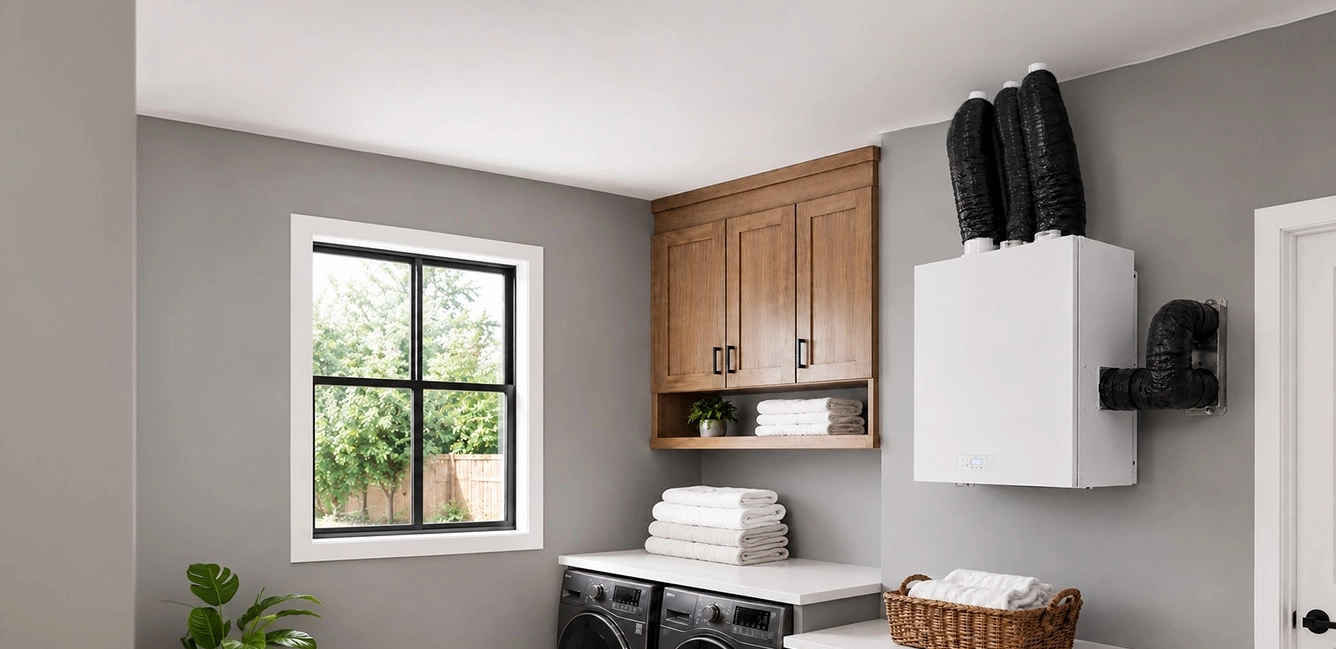
Sometimes comfort problems are not only about temperature.
A home can feel stuffy, humid, or uncomfortable even when the thermostat reads correctly.
Learn MoreIn many newer buildings, tight construction limits natural air movement. That can trap humidity, odors, dust, and other pollutants inside, forcing your heating and cooling systems to work harder.
An air exchanger helps expel humid, polluted indoor air and replace it with cleaner fresh air. The fresh air passes through the unit, is filtered, and dispersed throughout the building. HRV technology helps maintain temperature balance and supports energy efficiency while improving ventilation.
How air exchangers help
Ventilation
Airtight homes can feel efficient, but limited ventilation can be unhealthy and uncomfortable. Opening windows helps, but it also dumps heat in winter and pulls in humidity in summer. Air exchangers provide ventilation without sacrificing comfort the way open windows can.
Filtration
Air exchangers include filtration. As air moves through the unit, filters capture dust, pollen, mold, and other particles. That helps create a cleaner environment for families and employees.


Air Exchanger FAQs
An air exchanger removes stale, humid indoor air and replaces it with fresh filtered air. It helps improve indoor air quality and supports more balanced comfort.
HRV stands for Heat Recovery Ventilator. HRV technology helps bring fresh air in while maintaining temperature balance, improving comfort and efficiency.
Common signs include persistent humidity, window condensation, stale or musty odors, uneven comfort, and a home that feels stuffy even with the heat on.
Yes. By improving ventilation and removing humid air, an air exchanger can help reduce excess humidity that leads to condensation and discomfort.
Air exchangers are designed to provide ventilation while supporting efficiency. They can reduce the strain caused by poor airflow and excessive humidity, which can help systems operate more effectively.
They can. Filtration helps capture particles that would otherwise circulate indoors
Opening windows provides ventilation, but it also loses heat in winter and gains humidity in summer. Air exchangers provide controlled ventilation with less impact on indoor comfort.
Improving ventilation and reducing humidity helps lower conditions that contribute to mold growth, especially in basements, bathrooms, and tight homes.
Filter needs depend on usage and conditions. DOC can recommend a schedule based on the unit and indoor environment.
Yes. DOC can help you determine whether an air exchange system is a good fit and support installation and service.
Yes. Offices and commercial buildings can benefit from ventilation and filtration, especially in tightly sealed spaces.
Schedule an evaluation through DOC and describe what you are experiencing (humidity, odors, condensation, stale air).